Open-source Physics AI · Apache-2.0
Your simulation misses the deadline. We make it hit.
We turn your engineering case into a model that answers in seconds and is checked against the solver, the experiment or the standard — with the measured error on screen. CFD, surrogates, verification and digital twins.
Products
Four products, every one with a measured number.
Each exists in code, runs today, and shows its own error. Open the use cases for the external reference behind every figure.
Product 01 · CFD
PINNeAPPle CFD
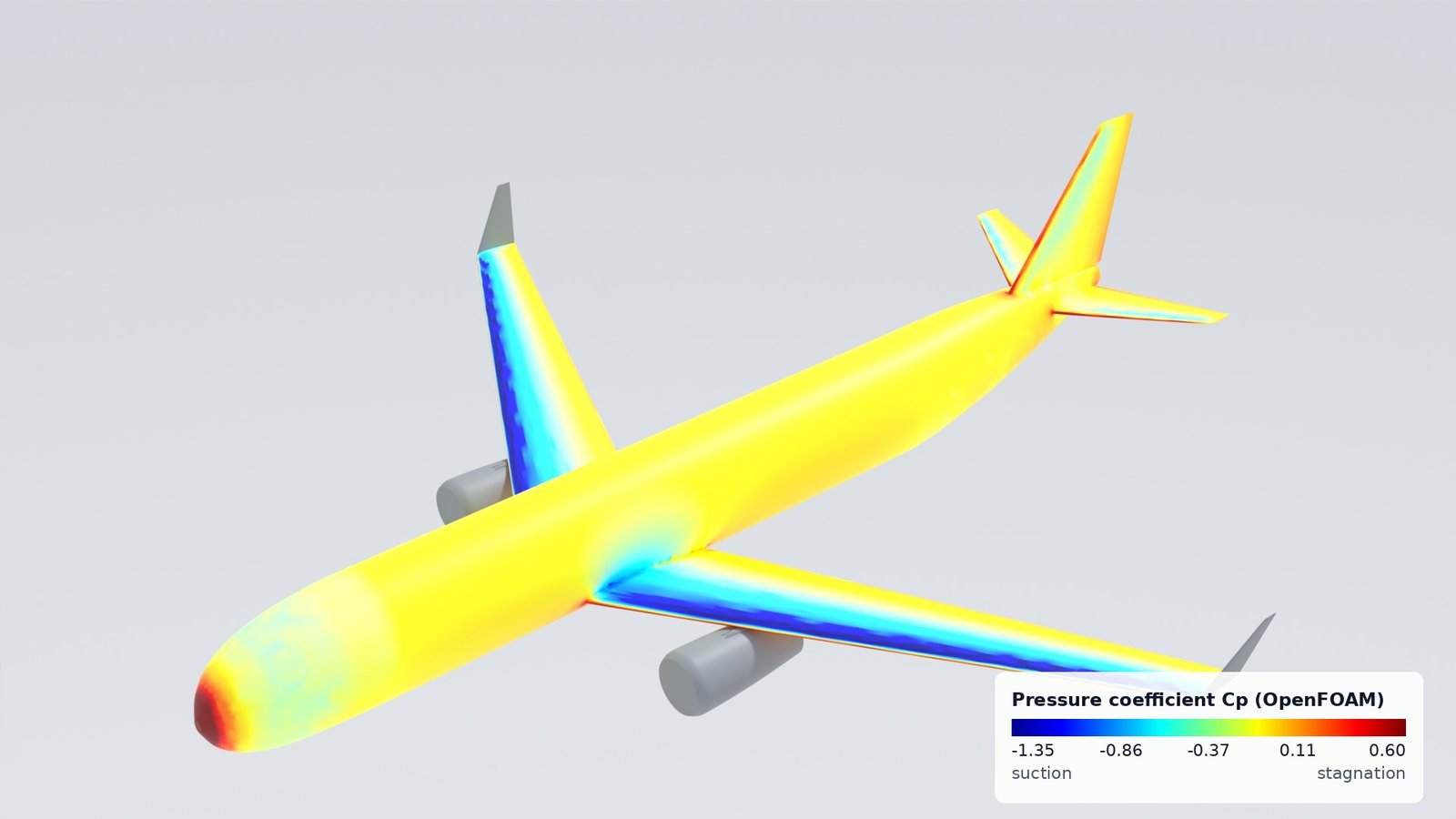
The full CFD workflow, E1 to E11: you describe the problem, the pipeline builds geometry and mesh, runs OpenFOAM, generates the dataset, trains the surrogate and closes with the evidence map.
- Erosion in a 90° bend: between 1.05× and 1.49× the published experiment, inside the factor-2 band industry accepts.
- Surrogate at 1.0% error on pressure drop at points it never saw.
- 32 simulations from geometry to trained model in 23 minutes.
Product 02 · Surrogates
Surrogate Studio
Turns the simulations your team already ran into a model that answers in microseconds — checked against the solver on every delivery, never against itself.
- ~200,000× faster than the real 3D simulation, across seven heat-sink geometries.
- 4.46% mean error and 7.35% worst case against FEniCS/dolfinx.
- Deterministic prediction: the same numbers on three runs, on different days.
Product 03 · Verification
VeriPhysics
The gate between the result and the decision: it takes a model, a CFD case or an FEA deck and returns one score per check — residual, convergence, calibration, coverage — with the number and its source.
- Caught what the loss hid on a client model: residual hundreds of times over the threshold.
- Unsupported beam: “Job finished” with 1.8e11 mm of displacement; preflight flags FAIL before the run.
- Mesh: metrics identical to OpenFOAM's checkMesh.
Product 04 · Digital twin
PINNeAPPle Twin
A validated model working next to operational data — and the layer that decides whether it may go on line. Signed contract, preflight, backtest against a redundant probe, and filed evidence.
- 0.216 °C error on HX-201, with fouling estimated at 0.001651 against a true 0.001637.
- 95.5% band coverage on the validation window, calibrated on the hours before it.
- An alarm 2.6 h before the measured crossing, with the forecast error stated.
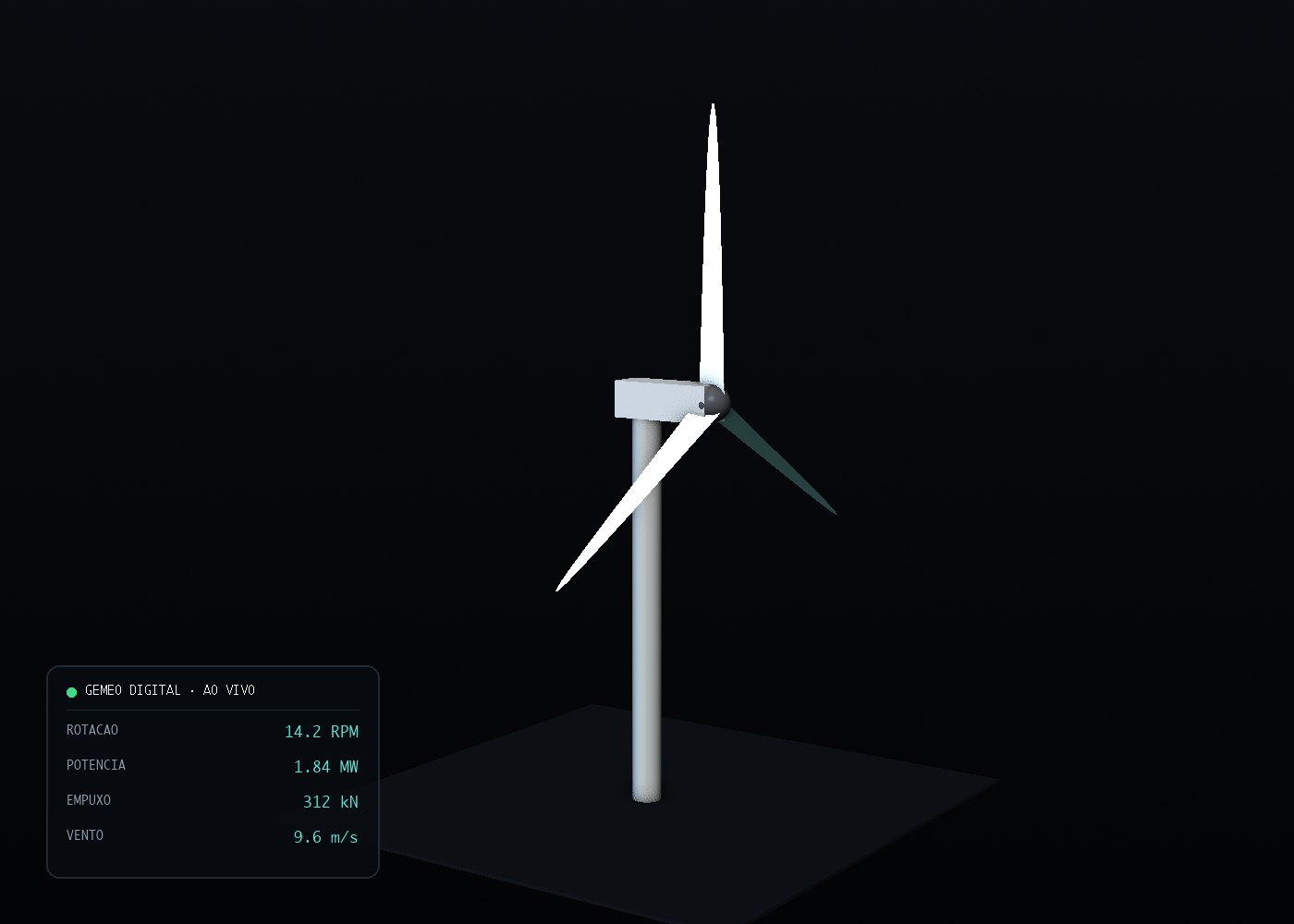
Today
What already exists today
This is not a roadmap announcement. It is in the repository and on PyPI:
Proof
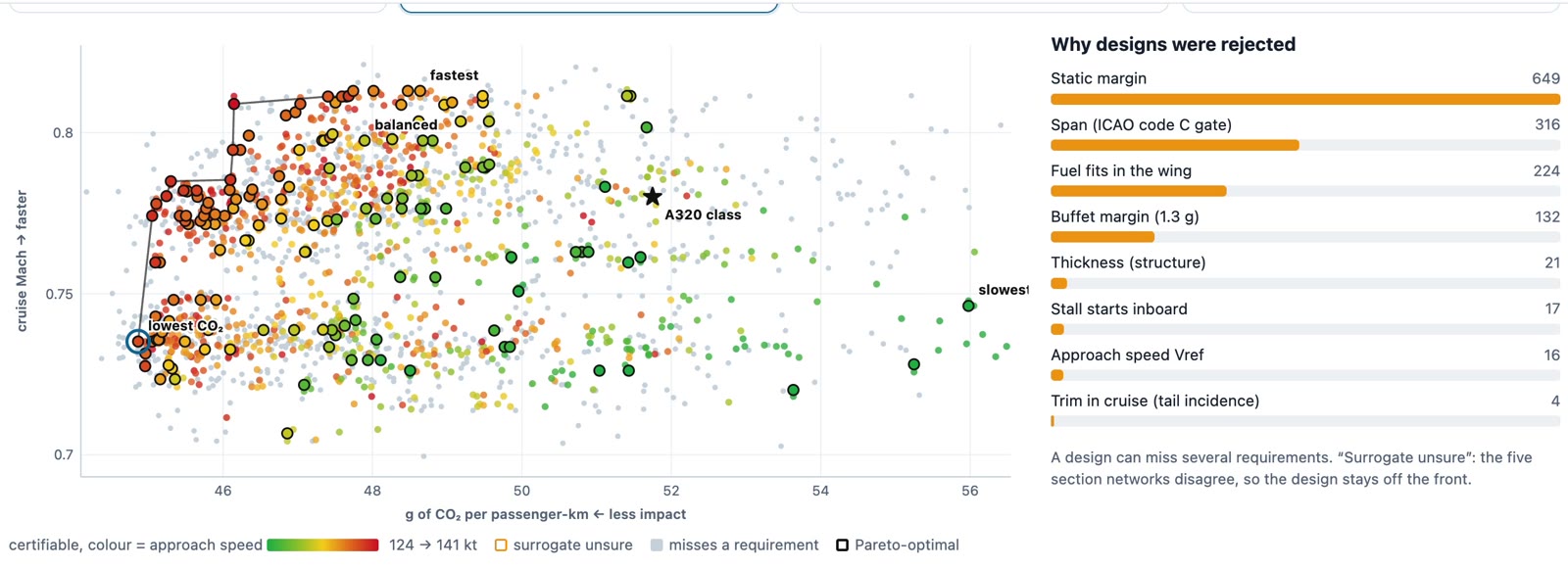
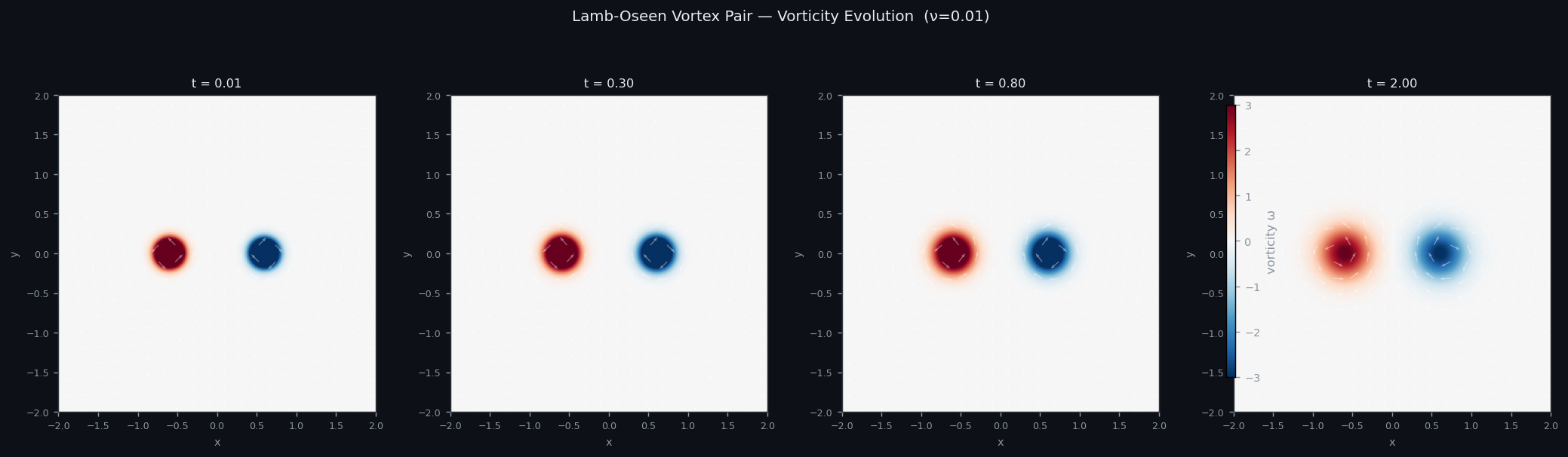
Three proofs, with a picture.
Results that came out of a run, not out of an estimate.
Next
Where to go next
The main page shows what we do. The rest is one click away:
Bring your case
Got a simulation that is slow, expensive or hard to verify?
Send it over. We come back with a closed scope and a measurable success criterion — or we tell you the classical method does it better.