HeatSink Sizer
Heat sinks in seconds, checked against published correlations.
0–5% vs. literature
Use cases
Every row below has a reference external to training: a published experiment, a finite-volume or finite-element solver, or an industry baseline. Where there is a limit, it is stated beside the number.
Evidence
| Case | Metric | Reference | Status |
|---|---|---|---|
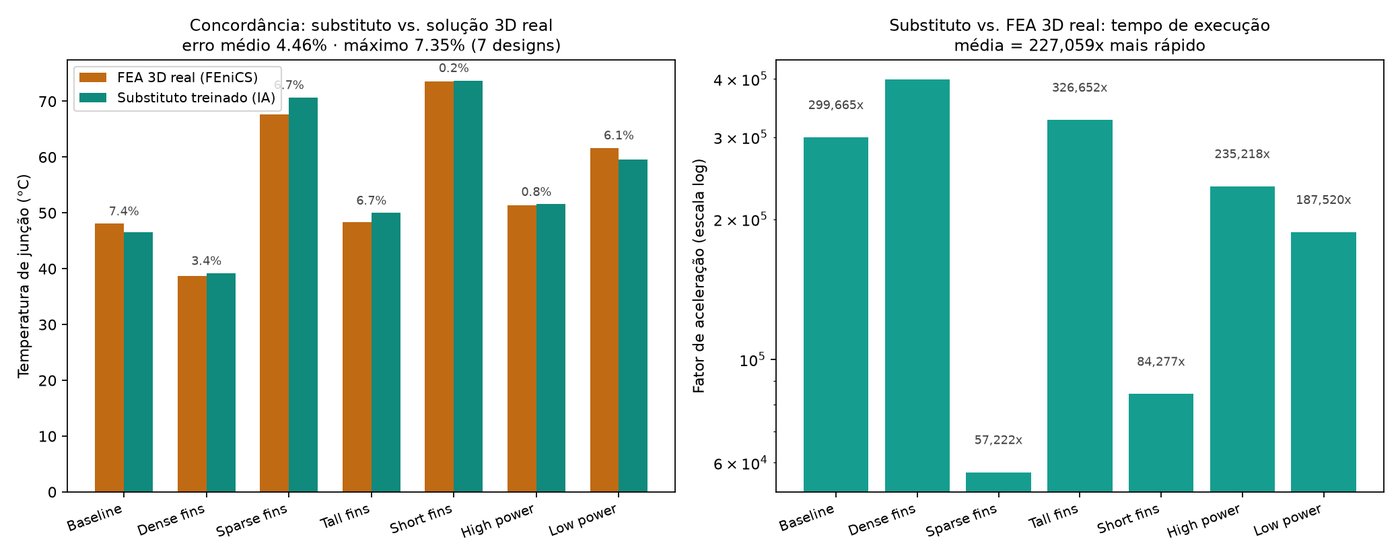
| Thermal surrogate7 heat-sink geometries | ~200,000× · 4.46% | 3D FEniCS/dolfinx + gmsh; worst case 7.35% | validated |
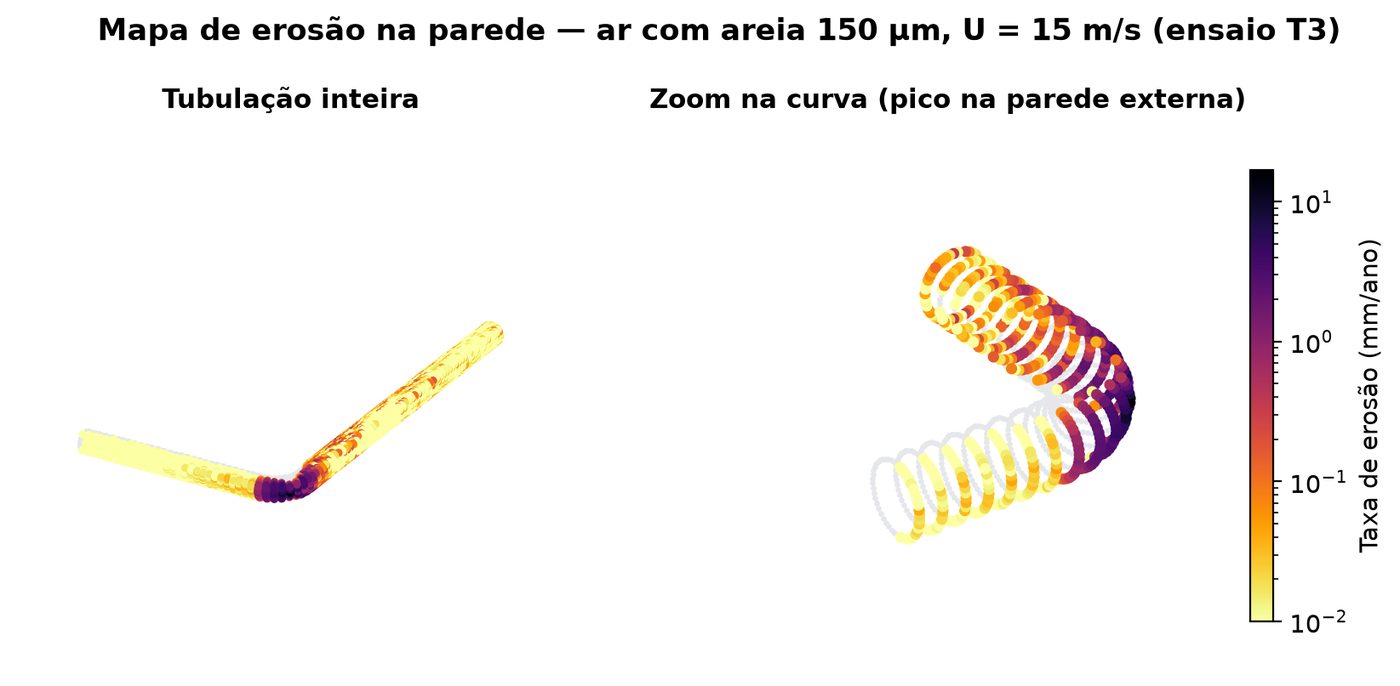
| Erosion in a 90° bendOpenFOAM + surrogate | 1.05–1.49× · 1.0% | Vieira et al. 2016, open experiment; factor-2 criterion | validated |
| Airfoil optimizationsurrogate-guided, re-verified | −18.2% | Profile drag; target lift held to 0.04% | validated |
| Vehicle aerodynamics10 simpleFoam runs | 0.05% · 1.3% | Velocity field and coefficients vs. OpenFOAM; Cd at 0.17% | validated |
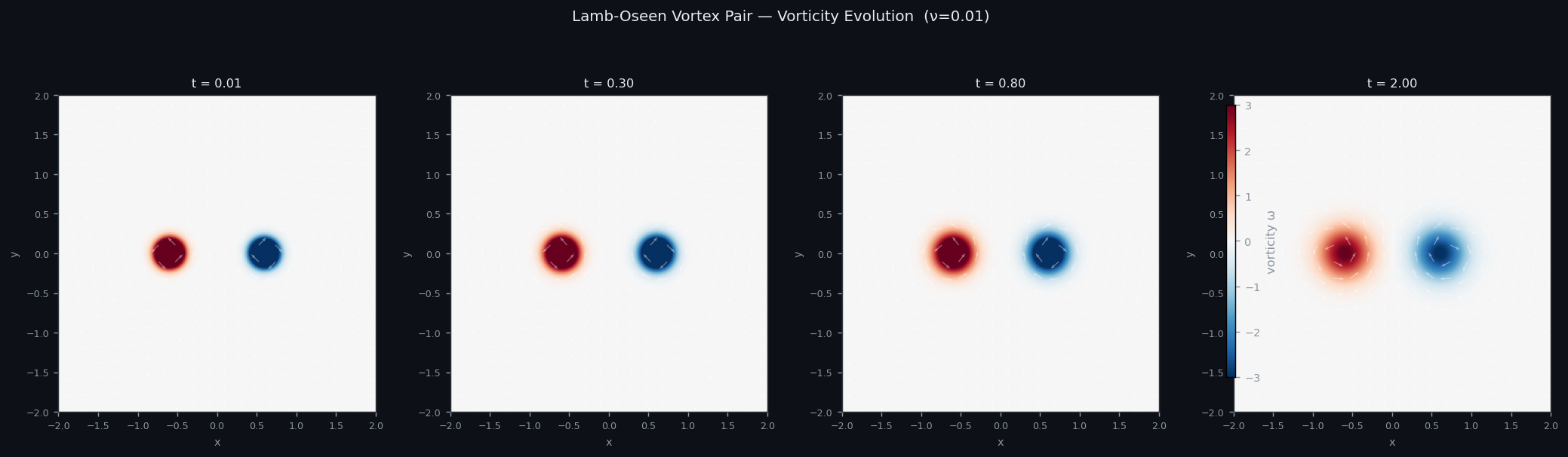
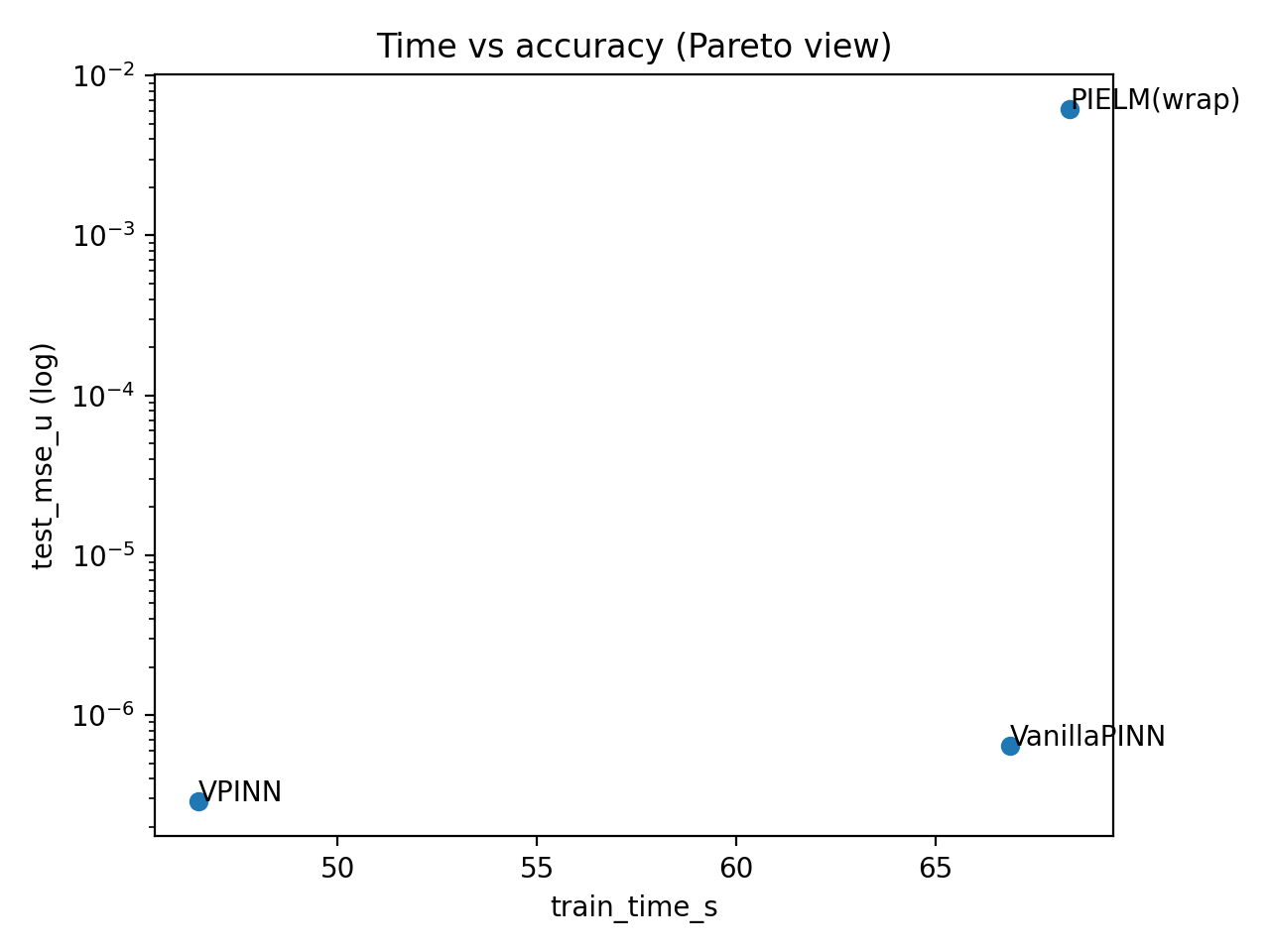
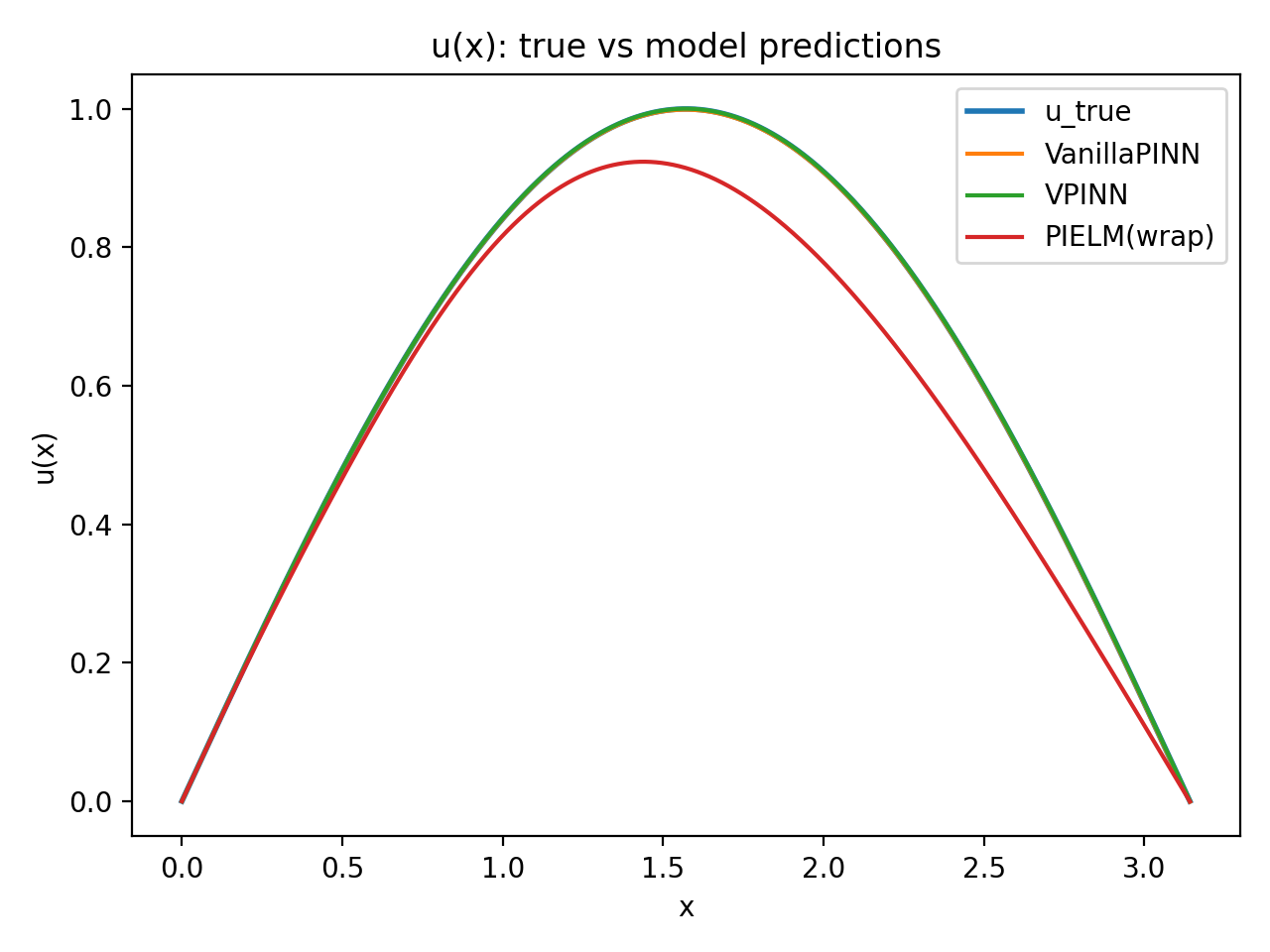
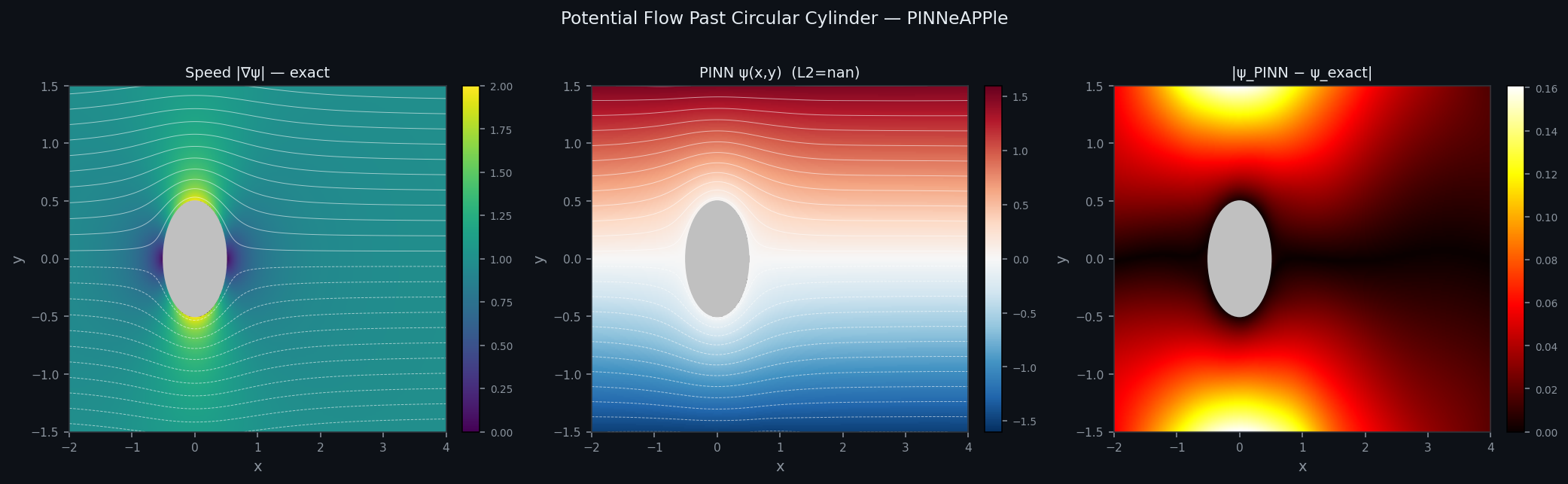
| PINN vs. finite volumesfield-by-field comparison | 0.39% | Independent finite-volume solver; max 0.67 °C | validated |
| Lid-driven cavitymesh refinement | 0.19% | Ghia et al.; starting from 1.26% | validated |
| Inverse h with a PINN2D plate and 3D block | 14.8 ± 0.3 | True value 15; hot spot 79.2 °C vs. 79.1 °C | validated |
| PCB thermodynamics8 package families | within 8% | Published θJA, from SOIC-8 to a 35 mm BGA | validated |
| Rover mobilitypublished model, corrected | 0.7–3.8% | Bekker–Wong; traction error 45× lower than the original | validated |
| Brake-disc Monte Carlomanufacturing tolerance | 1.9 °C | Nominal 495.9 °C; 95th percentile at 498.1 °C, limit 500 °C | validated |
| HX-201 twinfouled exchanger | 0.216 °C · 95.5% | Redundant probe kept out of the filter; true 0.001637 m²K/W | validated |
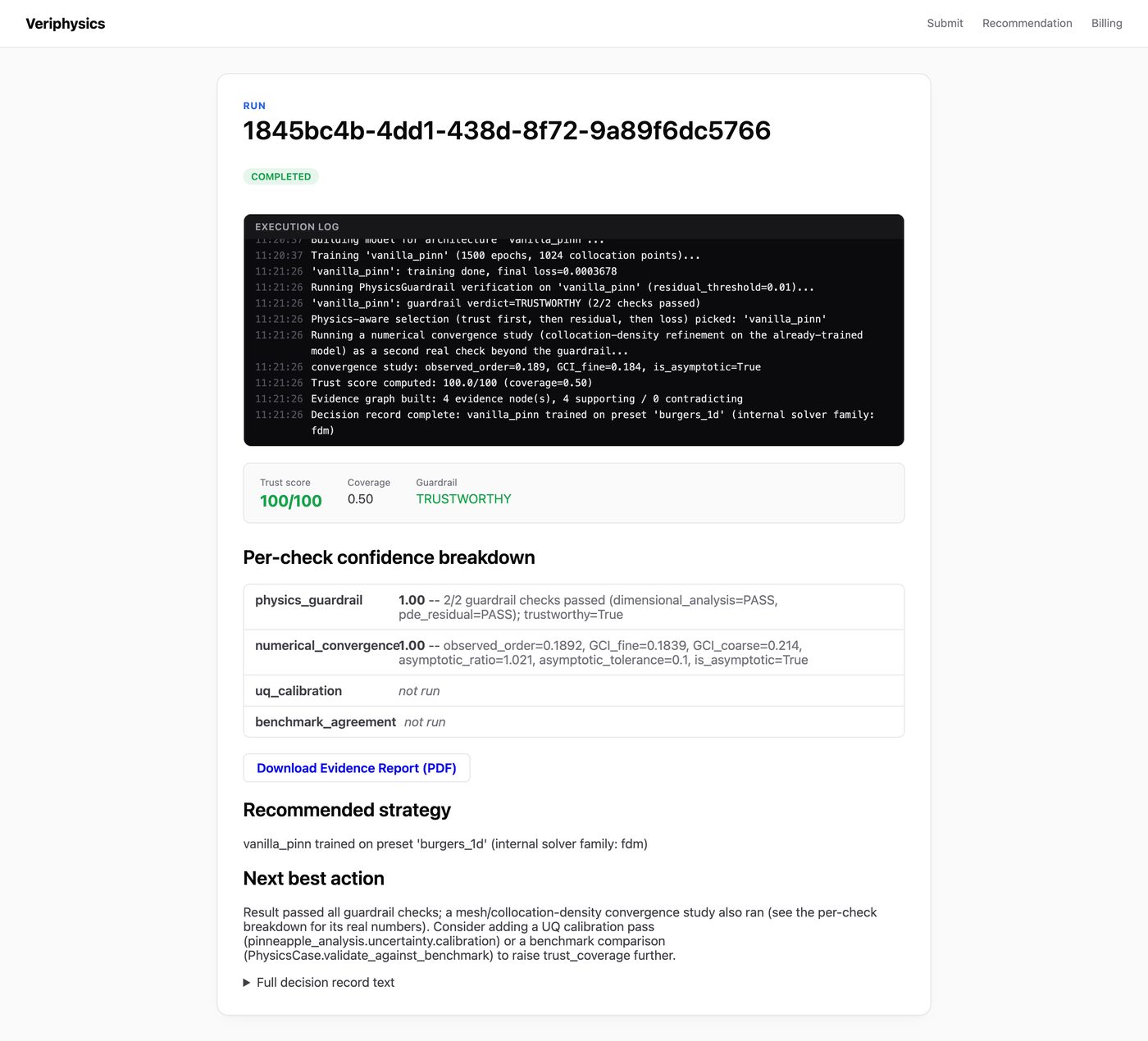
| Physics confidenceclient model, confidential | residual >100× | VeriPhysics guardrail over an already-trained model | validated |
Figures
And more
The platform holds 63 applications. These are the ones behind the four products above.
Heat sinks in seconds, checked against published correlations.
Junction temperature of every part in about a second.
PASS, WARNING or FAIL before the run, with file and line.
OpenFOAM, Gmsh, VTK, Abaqus, STL: metrics, heatmap, worst elements.
The h coefficient from a few thermocouples, with a PINN.
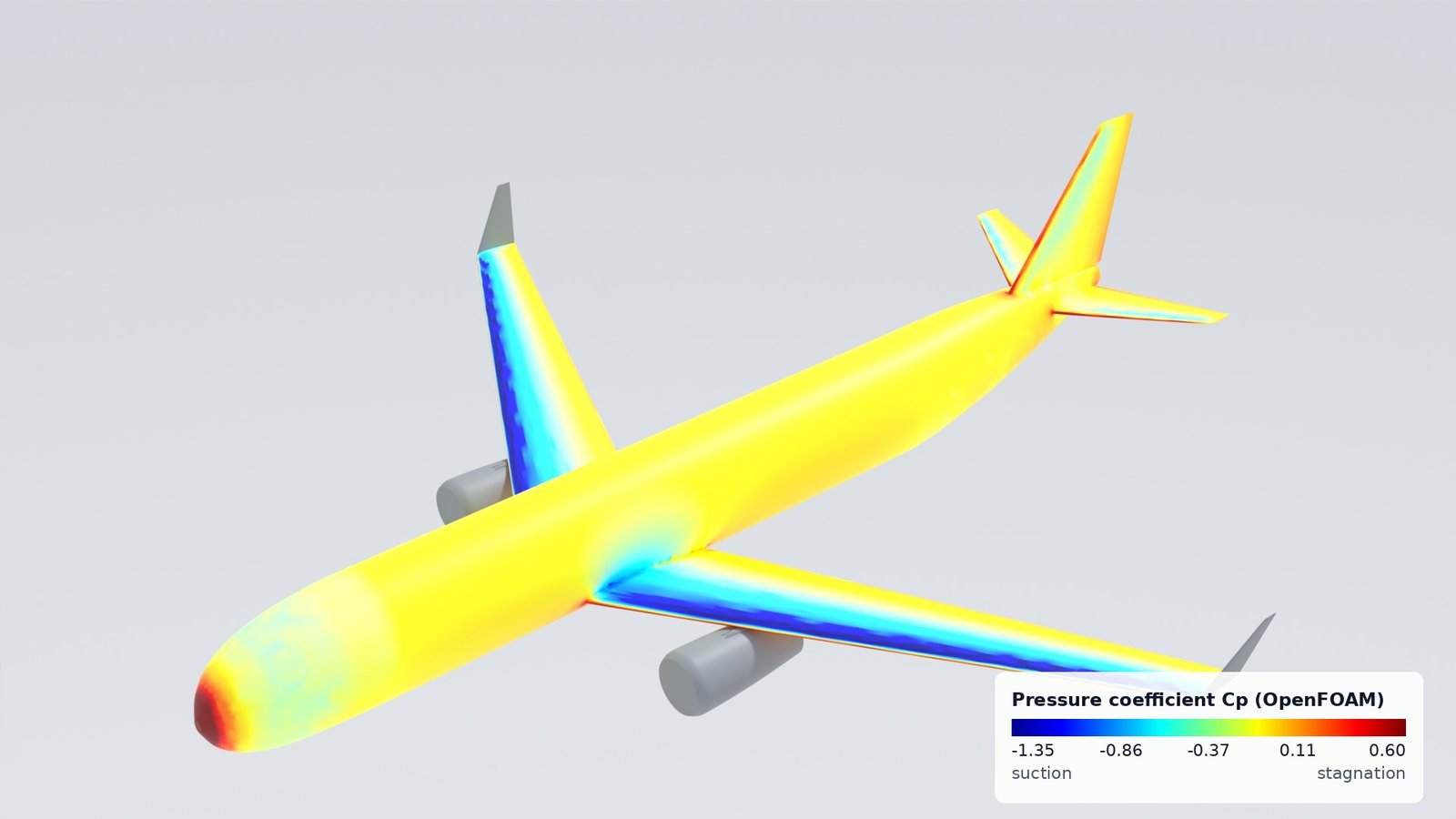
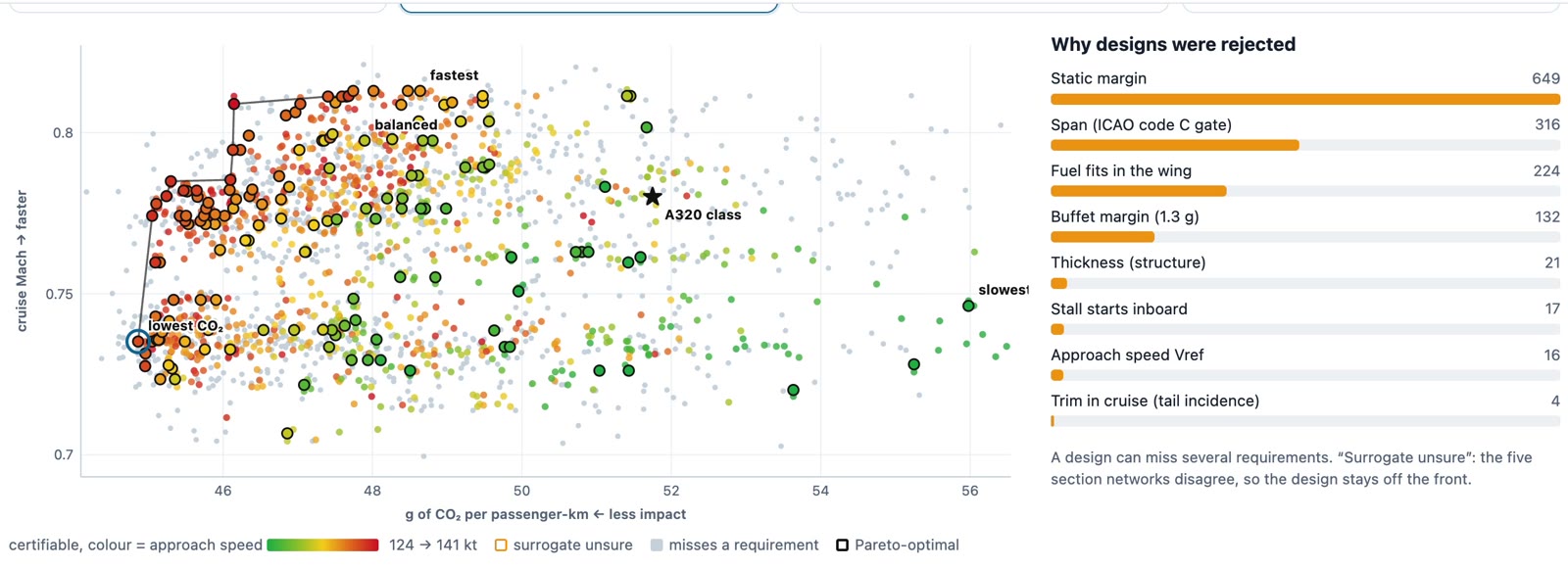
NSGA-II over the wing, checked in 3D OpenFOAM.
Simulation results become a fast model with enforced validity.
A validated model beside operational data, with EnKF and revalidation.
Experiments become reproducible evidence with SHA-256 on everything.
Bring your case
Send it over. We come back with a closed scope and a measurable success criterion — or we tell you the classical method does it better.