Articles
The cases, told in full.
Every article is one experiment: what was measured, what it was compared against, and where we are not there yet. The same house rule, applied to writing.
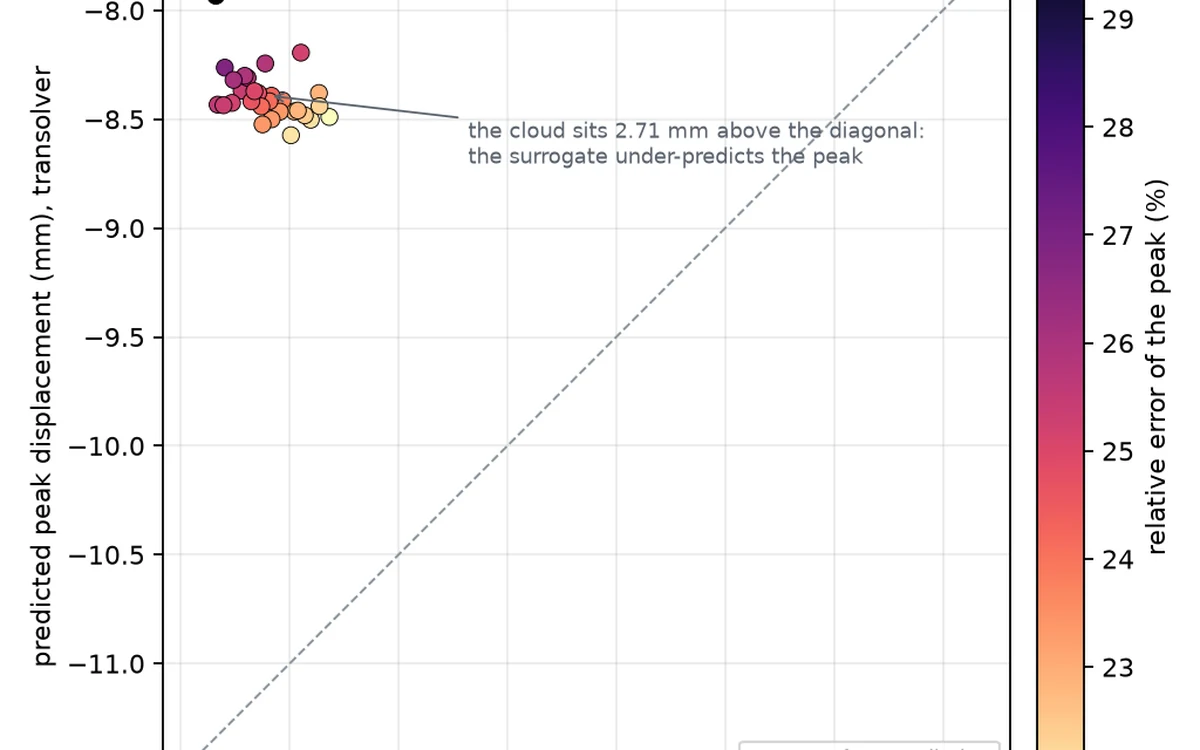
The surrogate gets the peak displacement of a design it has never seen
A bumper beam against a rigid pole, 200 designs solved by PINNeAPPle's own explicit crash solver and a Transolver that reads the seven design variables. On the 30 designs held out of training the peak displacement comes out with 24.4% mean error — and the same model without the design vector goes to 41.7%.
14 November 2026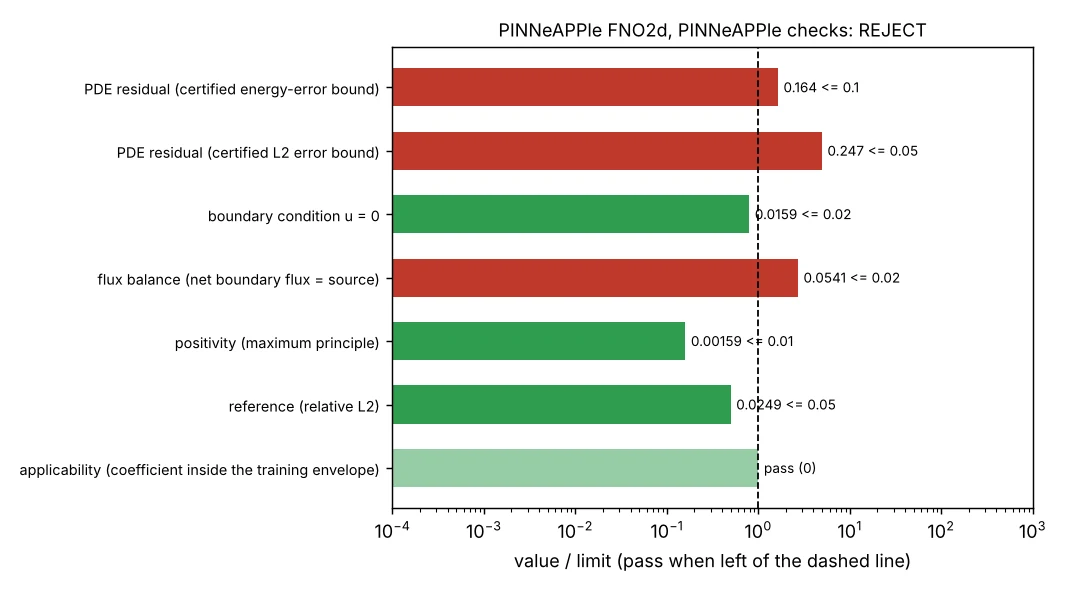
The FNO gets the field right and fails the physics
A cold plate with 50 layouts, an FNO with 1.18 million parameters trained in 133 s and 1.7% error against the finite-volume solution. And the trust card saying no.
13 November 2026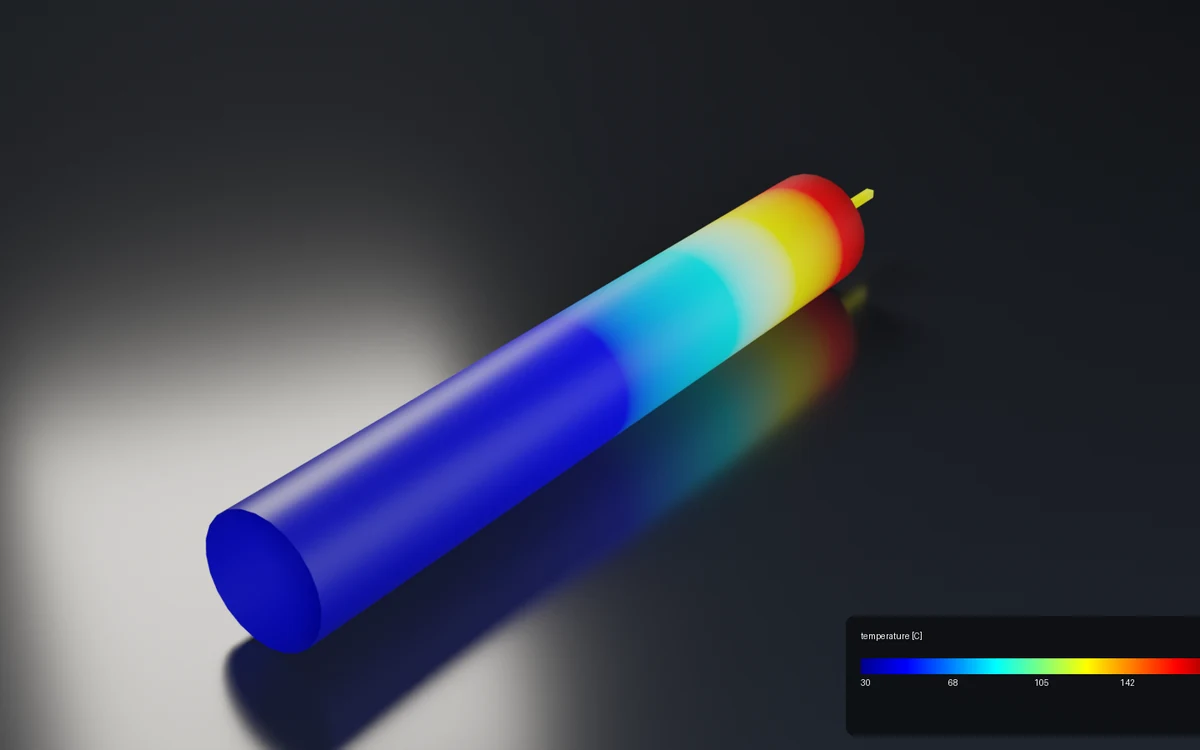
The same field, from the solver to the game engine
Three paths between PINNeAPPle and Unity: the twin exported as a project folder, a Unity scene turned into an OpenUSD layer with physics, and an HTTP bridge that answers in 23 ms while the game runs.
13 November 2026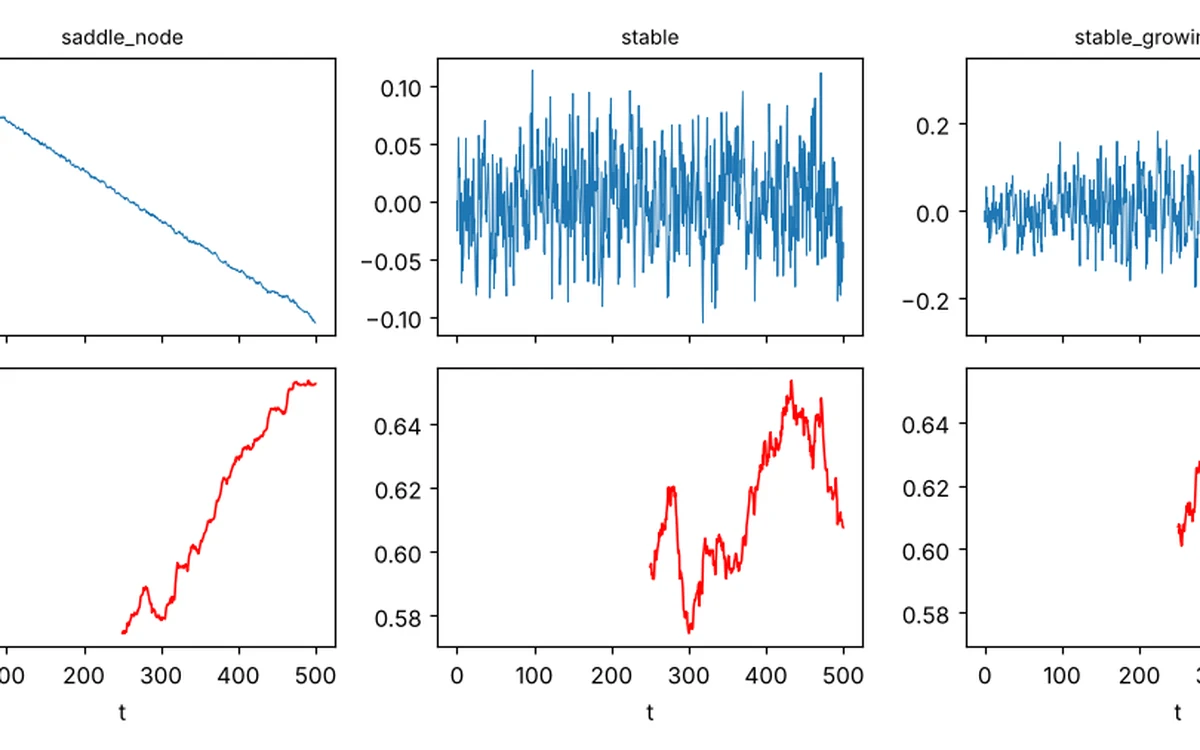
Five tools, five independent references
First passage, the Koopman spectrum, sensors chosen by Fisher information, dimensional analysis and early-warning indicators. Each one checked against an answer that did not come from the model.
13 November 2026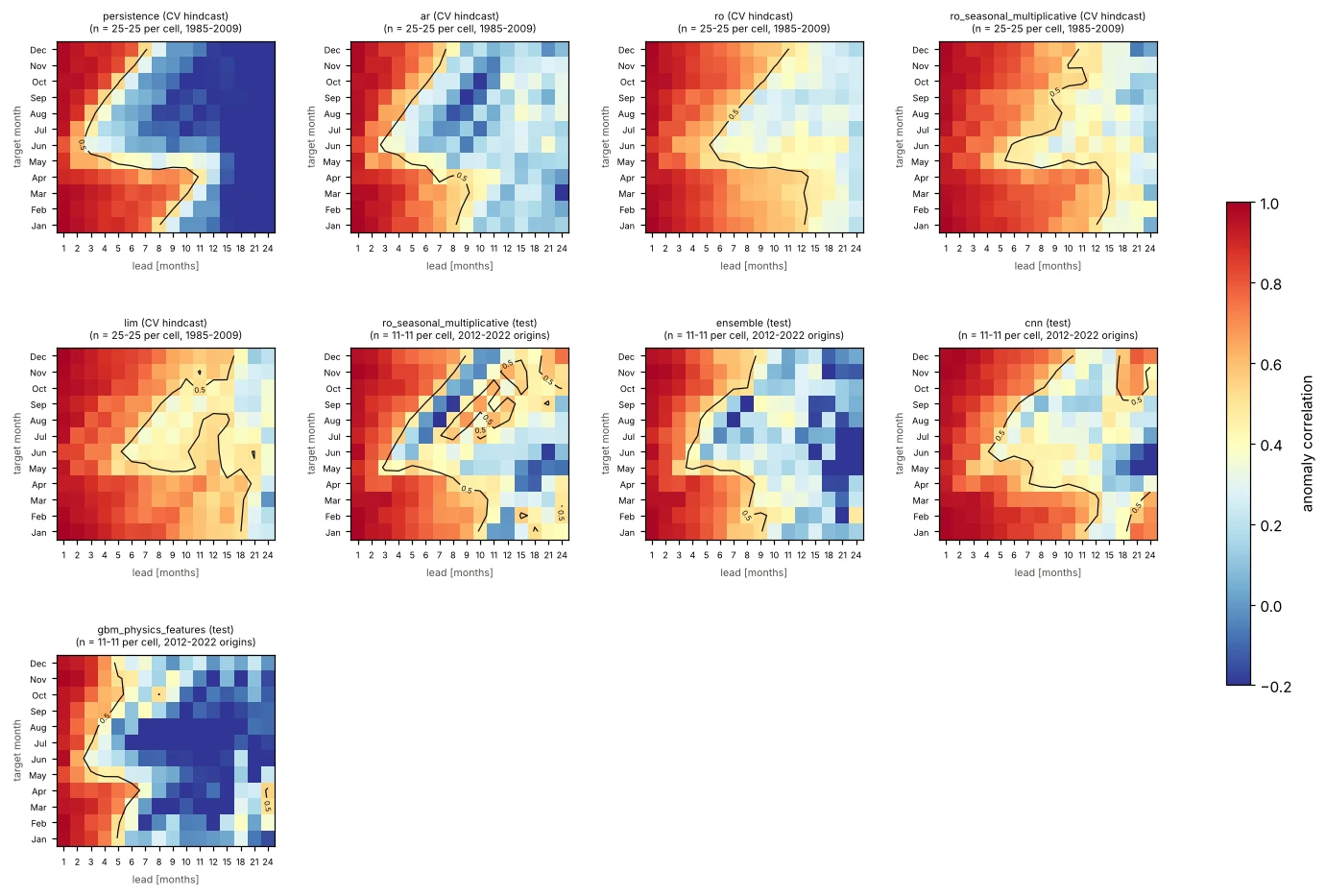
28 El Niño models, one protocol, and what lost
Five model families, from AR to PINN, on the same data, the same window and the same significance rule. At a 24-month lead a small oscillator wins, and two large networks do not beat persistence.
13 November 2026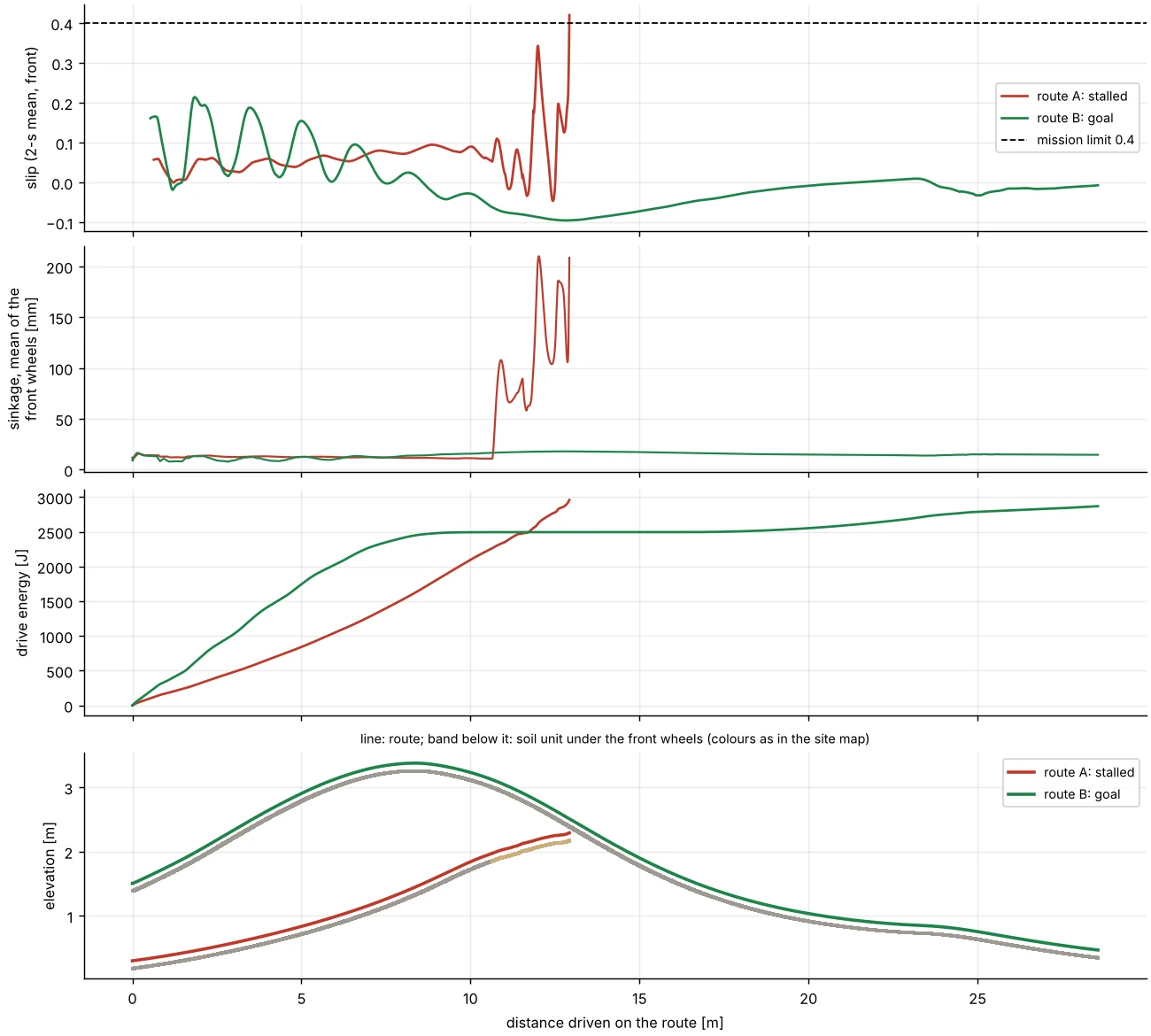
The rover that learned the soil from its own wheels
A mission in plain language, a route from the orbital map and a stall in the sand. The rover measured the slip, rebuilt the soil model, replanned and arrived, with half the slip and a tenth of the sinkage.
13 November 2026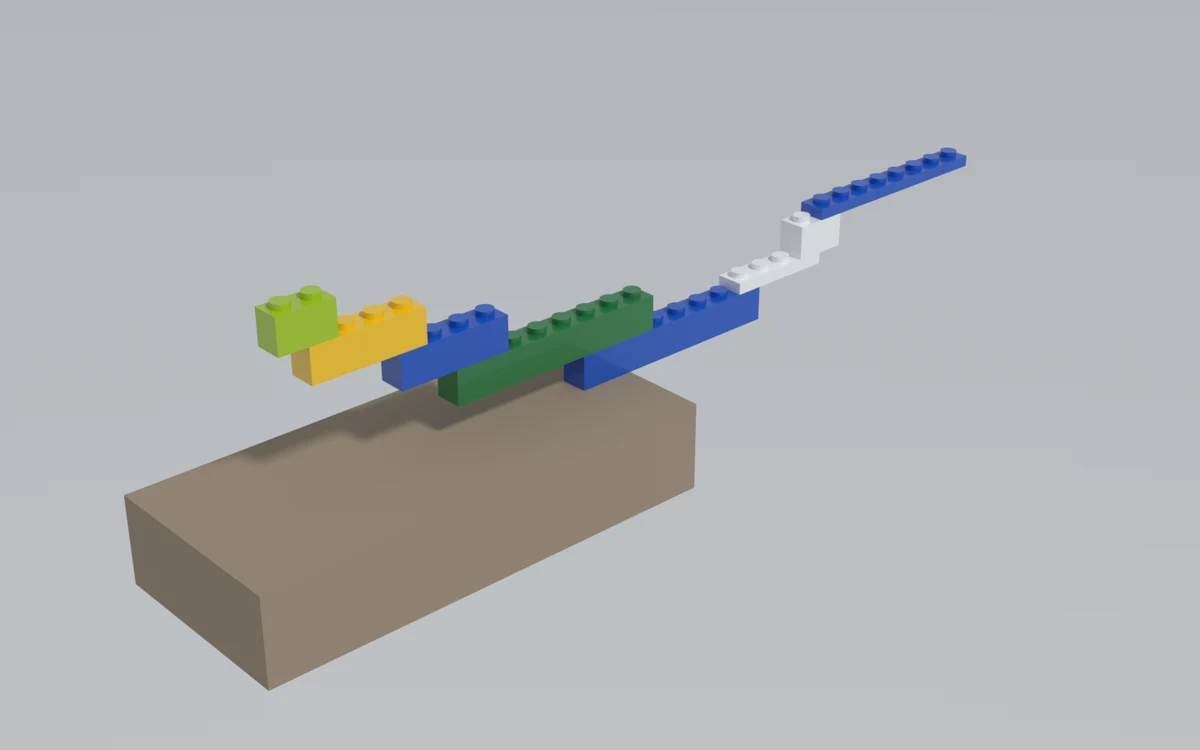
Three brick builds, with physics as the judge
A 135.9 mm overhang, a bridge of 3 parts and a 153.6 mm tower, all found by automated search. And the check that decides whether to trust them: statics against closed forms and against a rigid-body simulator.
13 November 2026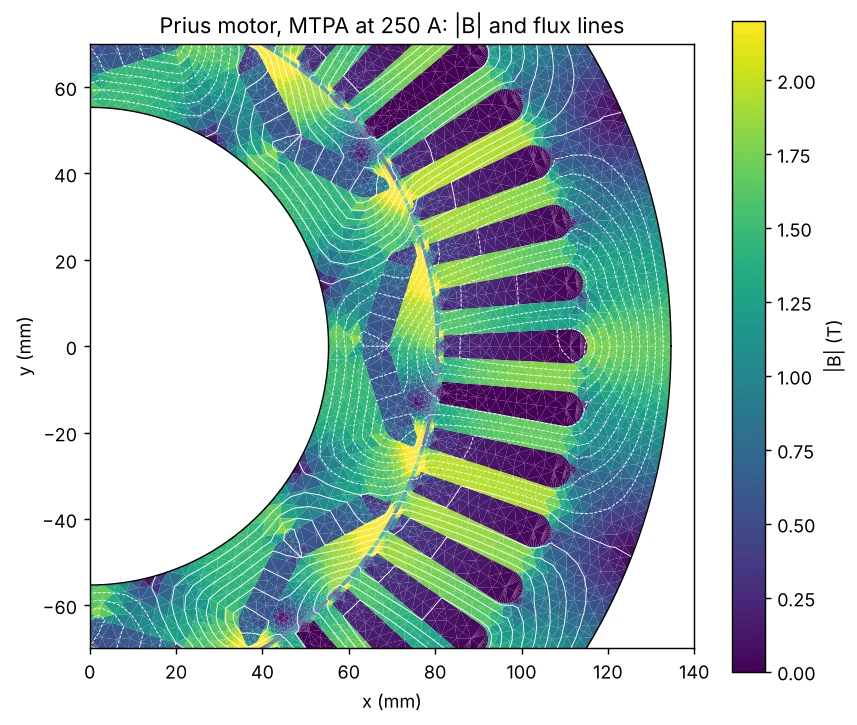
Two solvers agree to 0.19%, and both disagree with the paper
The Prius motor solved by our own FEM and by GetDP, an independent code, at 12 rotor positions. Both arrive at the same torque. Against the published benchmark, both drift the same distance.
13 November 2026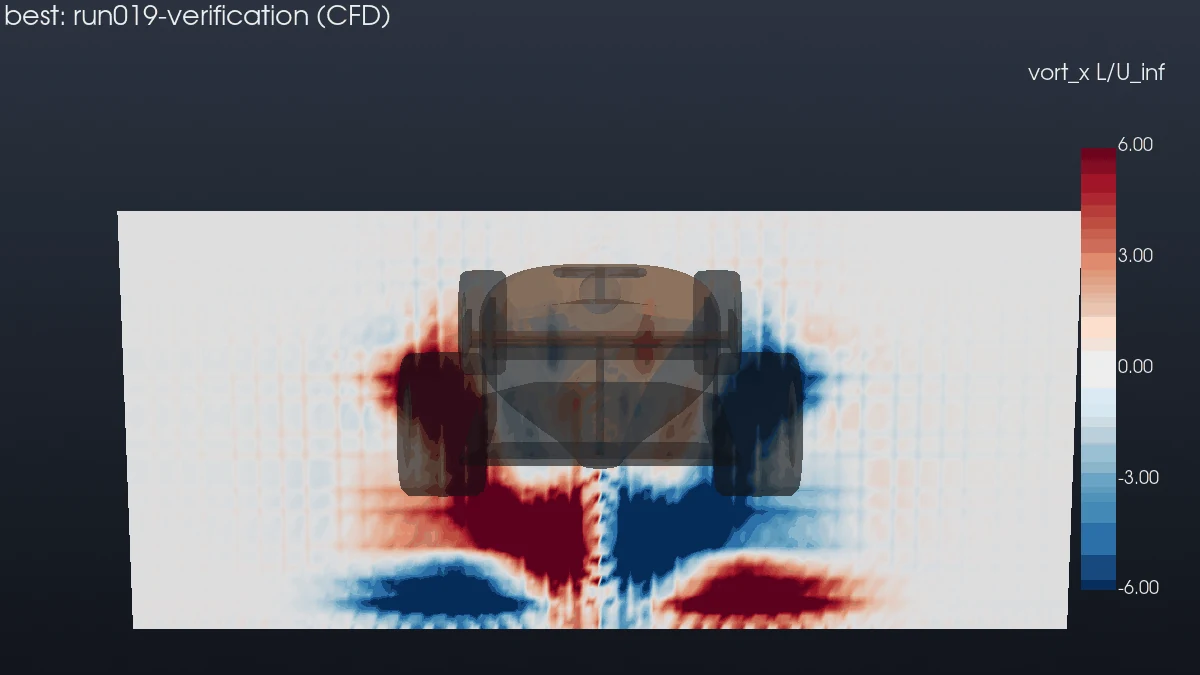
20 simulations, 3.3 hours, 15.7% less drag
A parametric racing car, three stated objectives and a budget of 20 CFD runs. The platform chose where to spend each one, and the gain was checked again on the fine mesh.
13 November 2026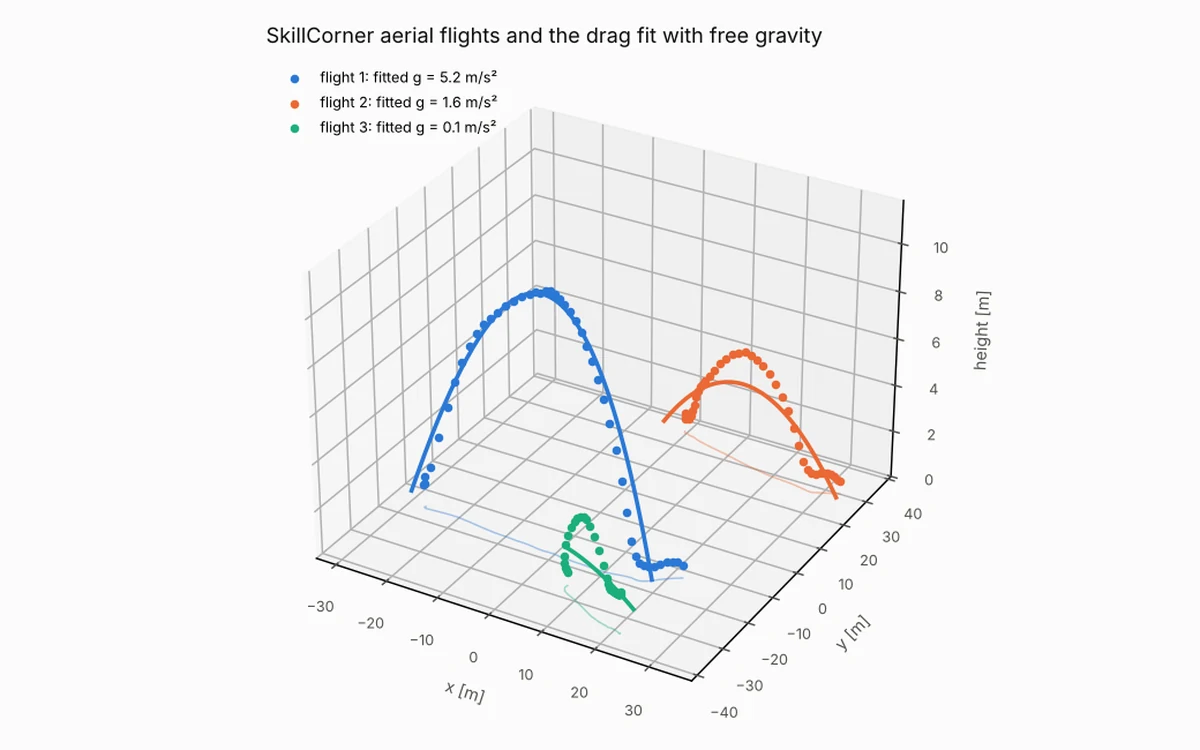
Where physics helps in football, and where it did not
Four questions on the same public data and the same rule: a data-only model against one that also knows the physics. Physics wins in three of them, gains nothing in the fourth, and the negative result is published all the same.
12 November 2026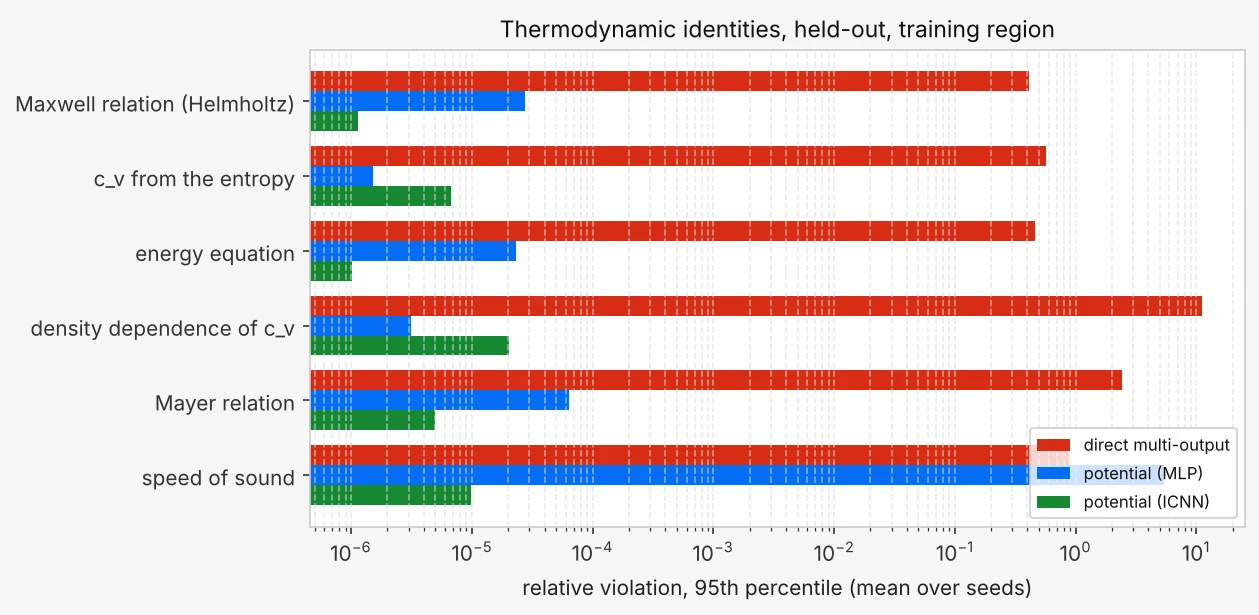
The more accurate surrogate was the one breaking thermodynamics
Two families of surrogate for CO₂ near the critical point, on the same data and the same training budget. The direct network is more accurate and violates the c_v identity by 1,100%. The potential one errs more and, with input convexity, keeps all six identities below 0.002%.
11 November 2026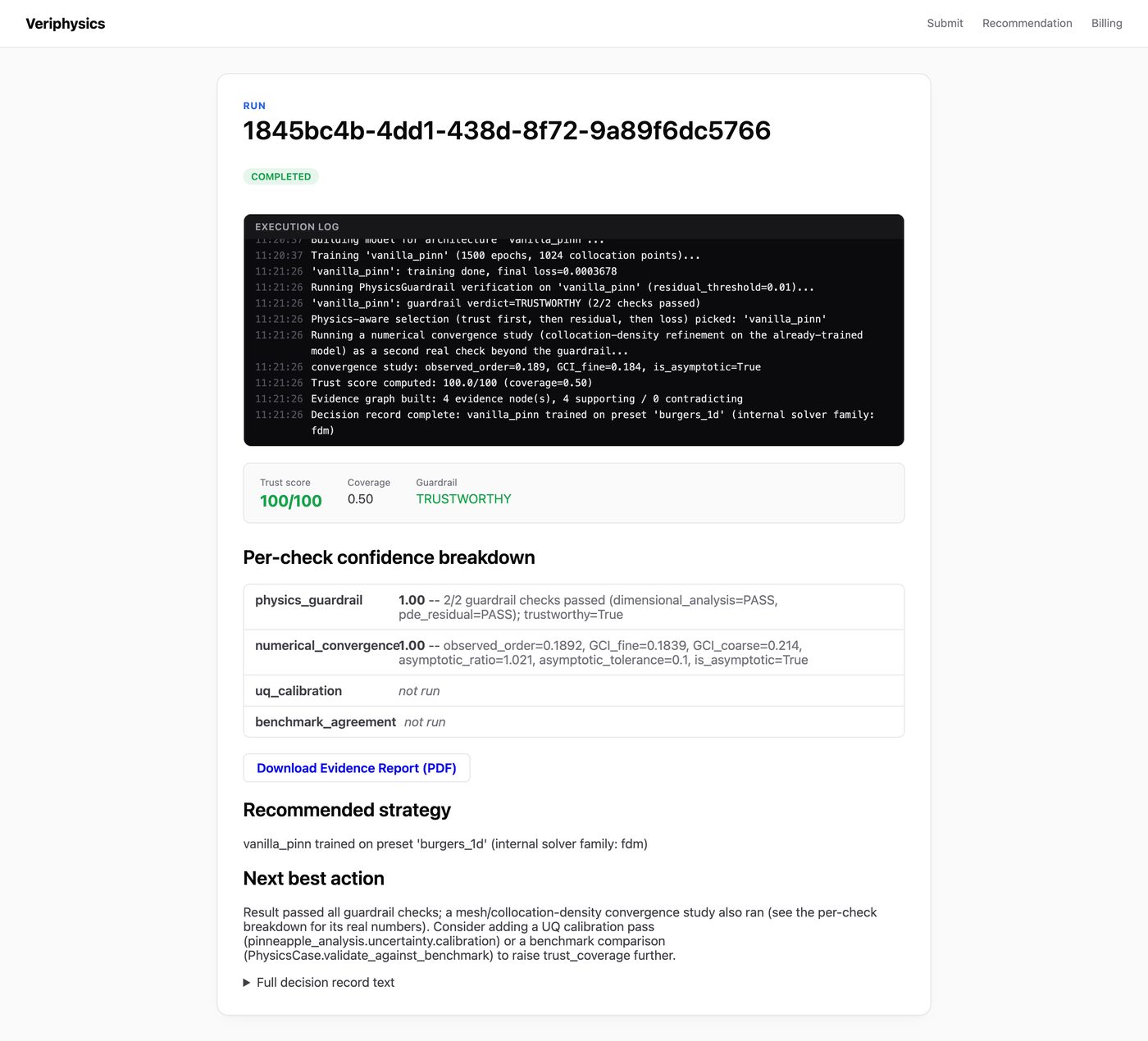
What the training loss was hiding
An already-trained model, with a healthy loss in the report, and a physics residual more than a hundred times over the limit. That is how the guardrail became part of the product.
2 October 2026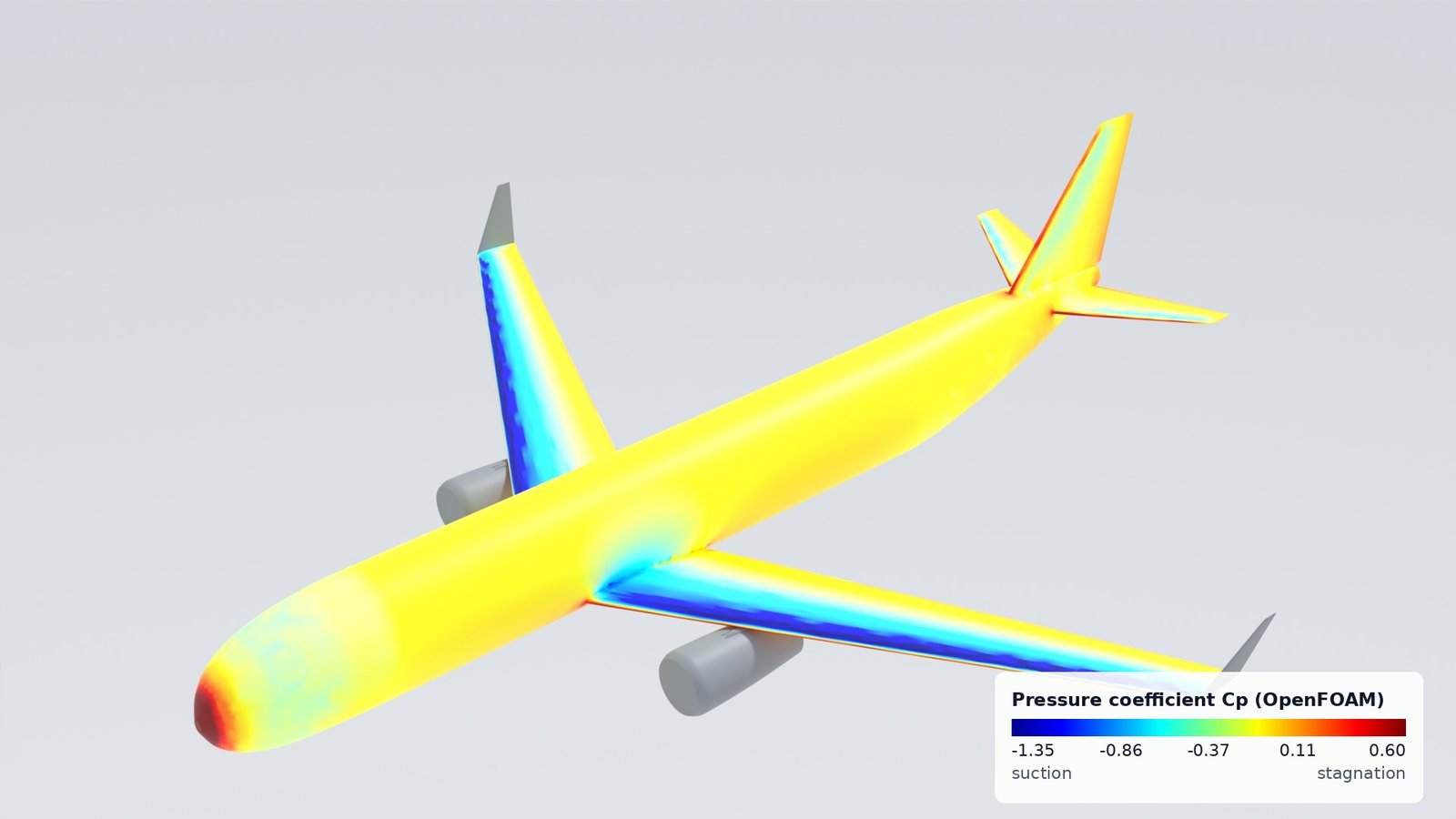
1,920 wings, three objectives and 13% less CO₂
Multi-objective optimization in 3D CFD: every wing was flown in OpenFOAM, and the result is not “the best wing”, it is the map of trade-offs between three objectives that fight each other.
20 September 2026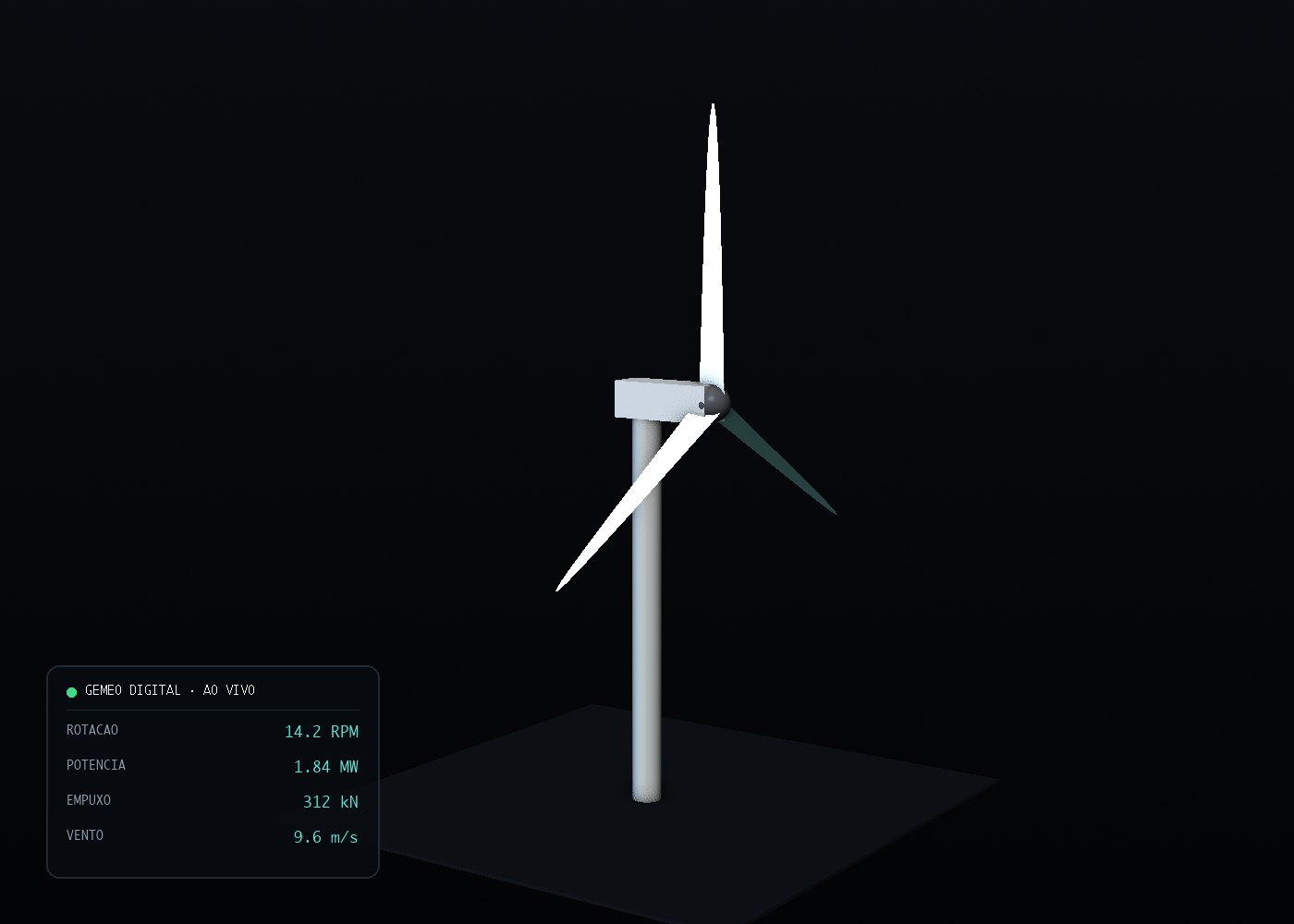
The twin that warned 2.6 hours ahead
An exchanger in operation, fouling that grows without warning, and a model that has to earn trust before it goes on the plant floor. The measured error was 0.216 °C.
5 September 2026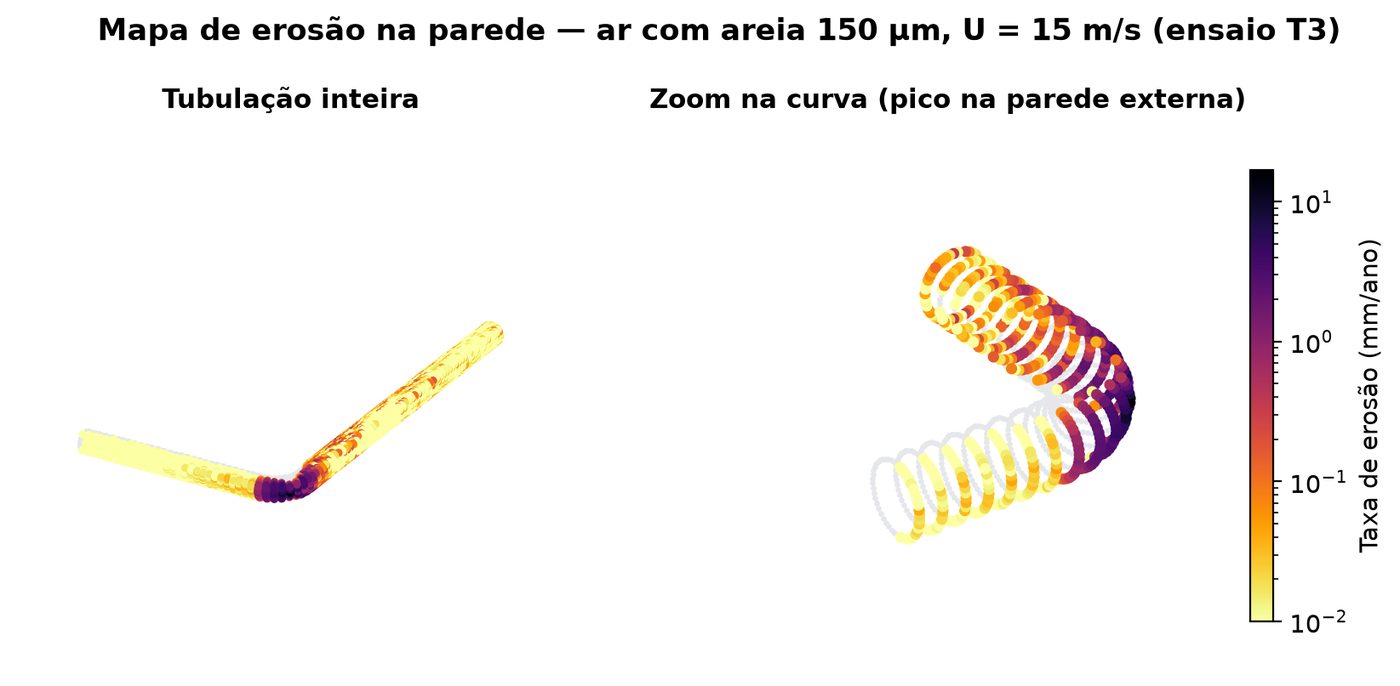
Erosion in a 90° bend: the numbers met the experiment
Sand-laden air at 15 m/s, a 90° bend and a published experiment to compare against. The result landed between 1.05 and 1.49 times the measured value, inside the factor-2 band industry accepts.
28 August 2026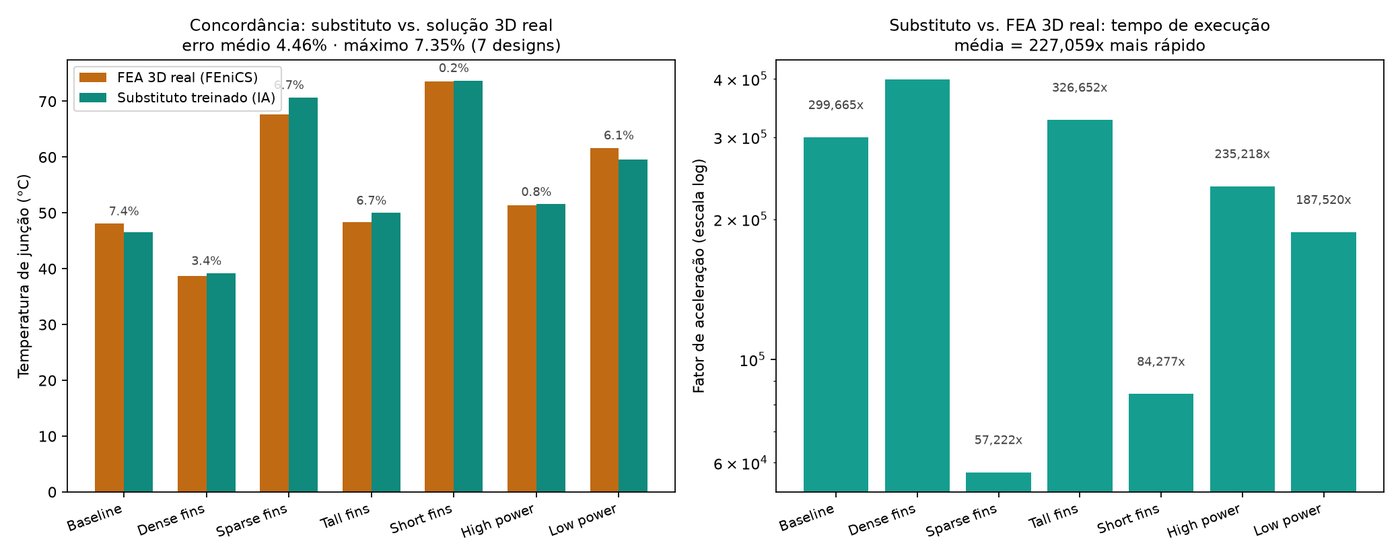
A heat sink that answers 200,000 times faster
Seven heat-sink geometries, a 3D solver and a model that returns junction temperature in milliseconds. 4.46% mean error; 7.35% worst case.
30 July 2026
The failure that shows up before the run
Most of the time lost in simulation is not compute: it is finding out, hours into the queue, that the mesh was poor or the case had no support. Two checks settle that before you press play.
18 June 2026Let's build your solution
Your engineering challenge could be our next project.
Talk to our team about Physics AI consulting or explore PINNeAPPle Studio for modeling and verification workflows.